Learning how to read a Japanese car auction sheet is the single most useful skill for anyone importing a car to Kenya. Every car sold at a major Japanese auction is inspected by an independent inspector. The results go on the auction sheet. As a result, the sheet tells you far more about a car's condition than any advert or seller ever will.
However, auction sheets are written in Japanese shorthand. They use grades, letters and numbers that confuse most buyers. Therefore, this guide explains every part of a typical sheet in plain English. Moreover, it shows how to verify that a sheet is genuine, which protects you from mileage and damage fraud.
Finally, it explains how Elisa Motors reads and translates every sheet for you before you buy.
What is a Japanese auction sheet?
Japan sells hundreds of thousands of used cars every month through dealer auctions. Large auction groups such as USS, TAA, JU, CAA and HAA run sites across the country. Before each sale, inspectors check every car and record the findings on a standard sheet.
The sheet includes the car's grade, mileage, equipment, damage map and inspector comments. Dealers bid based on this information. Consequently, inspectors have strong reasons to be accurate. Moreover, major auctions guarantee their sheets to member dealers.
The overall grade
The overall grade is the big number, usually in a box near the top. It summarises the car's condition.
Grade S or 6
Nearly new, often with very low mileage. These cars are rare and expensive.
Grade 5
Excellent condition with very few marks. Mileage is usually low. In fact, grade 5 cars look almost new.
Grade 4.5
Very good condition. Only small marks or minor wear. This is a sweet spot for buyers who want quality without paying a grade 5 premium.
Grade 4
Good condition. Some scratches, small dents or wear consistent with age and mileage. Grade 4 is the most common grade for good export cars. Therefore, it is the grade most Kenyan buyers target.
Grade 3.5
Average condition. More scratches, dents or wear. Some 3.5 cars are fine value. However, check the body map carefully.
Grade 3 and below
Below-average condition, often with significant wear or high mileage. We rarely recommend these for Kenyan buyers.
Grade R or RA
R means the car has had repairs to its structure, such as the chassis or frame panels. RA usually means minor structural repairs. These cars can be imported if they pass inspection. However, they sell for less in Kenya and may hide weak spots.
The interior grade
A separate letter grades the interior, usually from A to E. A is excellent. B is good with light wear. C shows noticeable wear or stains. D and E show heavy wear or damage. Therefore, an overall grade 4 car with interior B is a strong combination.
The body map and damage codes
The sheet includes a diagram of the car. Inspectors mark damage on each panel using letters and numbers. The letter shows the type of damage. The number shows its size, from 1 (small) to 3 (large).
A means scratch. For example, A1 is a tiny scratch and A3 is a large one. U means dent. W means wave or ripple, often a sign of previous repair. S means rust. C means corrosion. X means the panel needs replacement. XX means the panel has been replaced. B means a dent with a scratch. Moreover, Y means a crack, and P means paint marks.
A few A1 and U1 marks are normal on a grade 4 car. In contrast, several W or XX marks suggest past accident repairs.
Mileage on the auction sheet
The sheet records the odometer reading at inspection. This is one of the most important numbers. If a car later appears in Kenya with lower mileage, something is wrong. Read our mileage check guide for how to verify it.
Equipment and options
The sheet lists equipment such as air conditioning, power steering, navigation, sunroof, leather and alloy wheels. It also shows the model code, grade (trim) and engine size. As a result, you can confirm the car's exact spec before buying.
Inspector comments
A section for handwritten comments notes extra details. Examples include engine noises, warning lights, smells, aftermarket parts or missing items. These comments are often the most revealing part of the sheet. Therefore, we always translate them in full.
How to spot a fake or edited auction sheet
Some sellers alter sheets to hide damage or roll back mileage. Warning signs include inconsistent fonts, blurred areas around the grade or mileage, and missing auction details. Moreover, a sheet that does not match the car's chassis number is a red flag.
The safest approach is to obtain the sheet directly from the auction record using the chassis number. Verification services can retrieve the original. We verify every sheet before you pay.
Real examples for Kenyan buyers
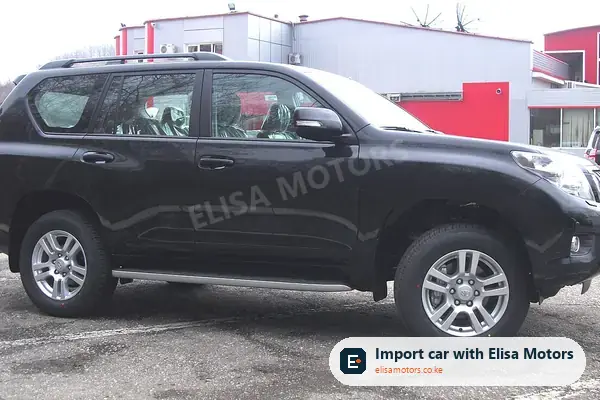
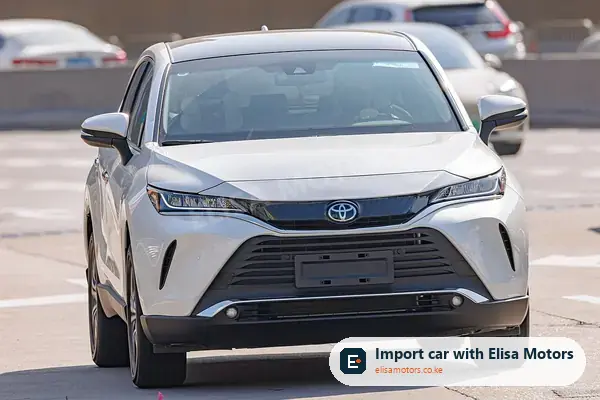
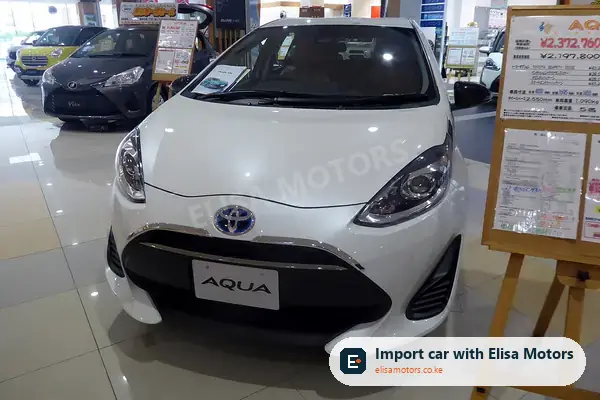
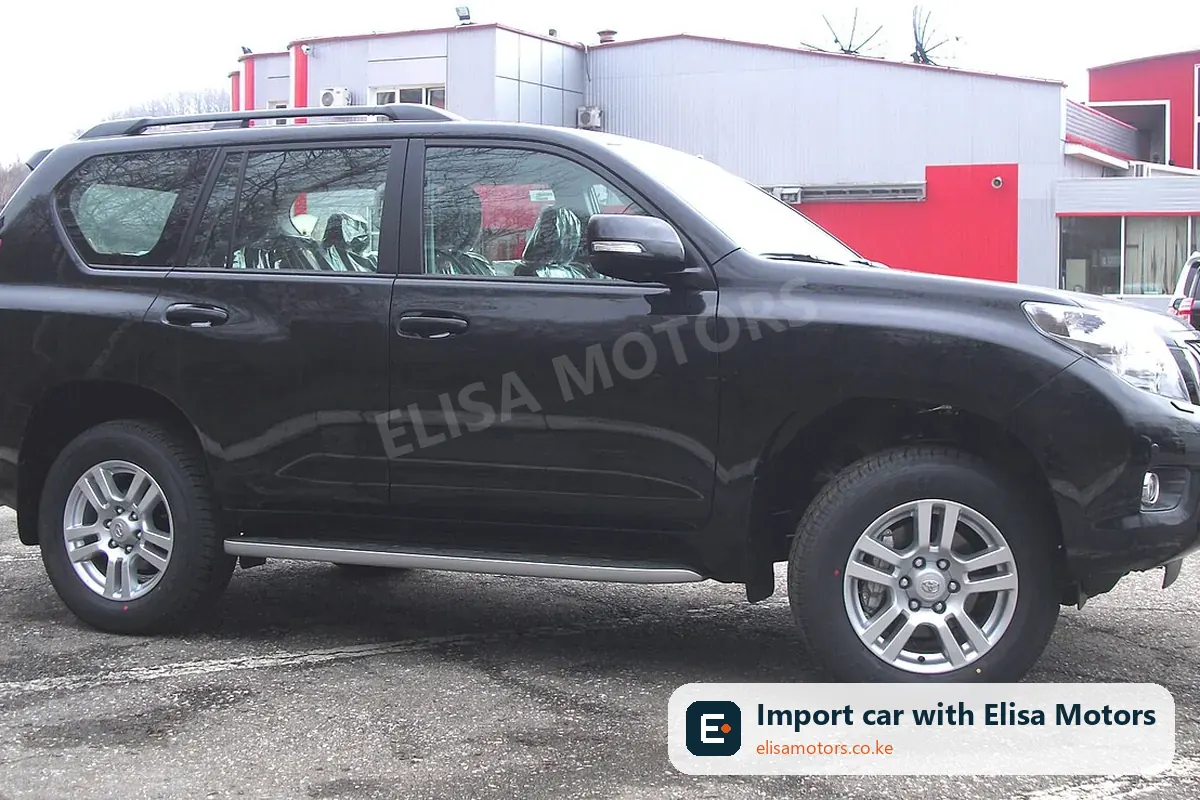
A Toyota Aqua with grade 4.5 and interior B is a great buy for a first car. Meanwhile, a Prado with grade 4 and a few A1 marks is normal for its age. In contrast, a Harrier graded R with XX on the front panels has had a significant front-end repair.
Similarly, a CX-5 diesel with a comment about warning lights should be avoided. Read our CX-5 diesel problems guide.
Our services: auction sheet reading and verification
Elisa Motors reads, translates and verifies every auction sheet. Here is what we do for buyers in Nairobi, Mombasa, Nakuru, Kisumu, Eldoret and beyond.
1. Full English translation
We translate the grade, damage map, equipment and handwritten comments into plain English. As a result, you understand exactly what you are buying.
We send it to you on WhatsApp with photos.
2. Sheet verification by chassis number
We retrieve the original auction record using the chassis number. That confirms the sheet is genuine.
Any mismatch means we walk away.
3. Grade advice for your budget
We help you choose the right grade for your budget. For instance, a grade 4 car may offer better value than a grade 4.5 car at a higher price.
We explain trade-offs honestly.
4. Auction bidding
We bid on your behalf within your limit. Read our Japanese auctions guide.
You only pay for cars you approve.
5. Inspection and shipping
Every car passes the KEBS-appointed inspection. Read our QISJ inspection guide. Then we ship it to Mombasa.
You get WhatsApp updates throughout.
6. Clearing and registration
We clear the car at Mombasa and register it with NTSA. Read our Mombasa clearing guide.
You receive the logbook in your name.
7. Delivery across Kenya
We deliver to Nairobi, Kiambu, Thika, Machakos, Nakuru, Eldoret, Kisumu, Kericho, Nyeri, Meru, Mombasa and Malindi.
Read our car transport guide.
Auction sheet FAQs from Kenyan buyers
Many buyers ask whether grade 3.5 cars are safe. Often they are, if the damage is cosmetic. However, check the body map and comments. Others ask whether grade R cars pass Kenyan inspection. Some do, but they may be harder to resell.
Buyers also ask whether locally sold "ex-Japan" cars have auction sheets. Many do. Ask the seller for the chassis number and we can try to retrieve it.
Typical grades by car type
Different cars tend to appear at different grades. For example, small city cars like the Vitz, Note and Fit often show grade 3.5 or 4, because they live hard urban lives. Meanwhile, premium SUVs such as the Harrier and Prado often appear at grade 4 or 4.5.
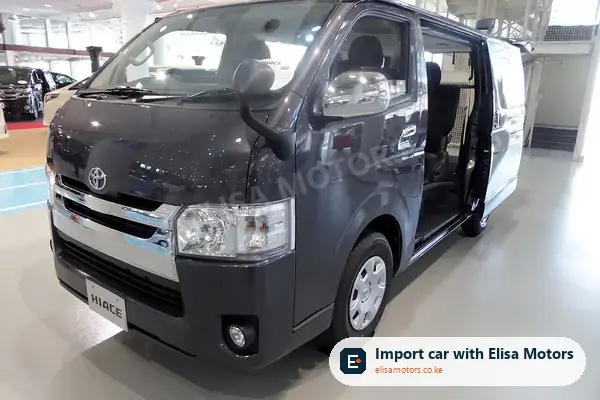
Commercial vehicles like the Probox and Hiace are frequently graded 3 or 3.5 due to work use. Therefore, compare grades within the same model, not across different types of car.
Auction sheet vs export certificate
The auction sheet describes condition at the time of sale. The export certificate is an official Japanese document issued when the car is deregistered for export. It records the chassis number, first registration date and other details. In addition, it sometimes records mileage.
Together, they confirm the car's age and history. KRA and KEBS rely on the export certificate for the first registration date. Read our 8-year rule guide for why that date matters so much.
Common misunderstandings
First, a high grade does not mean perfect mechanics. Inspectors focus on body and interior, with only basic mechanical checks. Therefore, read the comments for engine or gearbox notes. Second, a low grade does not always mean a bad car. Sometimes a grade 3.5 car has only cosmetic marks.
Third, the body map uses the inspector's shorthand, which varies slightly between auctions. Moreover, some auctions add their own symbols. As a result, an experienced reader adds real value.
Using the sheet to negotiate
If you are buying exporter stock rather than bidding, the auction sheet helps you negotiate. For example, if the sheet shows several U2 dents, you can ask for a lower price or repairs before shipping. Similarly, missing equipment noted on the sheet should be reflected in the price.
Auction sheets for hybrids and diesels
For hybrids, check comments about warning lights or the hybrid system. For diesels, look for notes on smoke, engine noise or DPF warnings. Read our hybrid import guide and CX-5 diesel guide for more.
Grades and resale in Kenya
Kenyan buyers increasingly ask to see the original auction sheet when buying a used ex-Japan car. A grade 4 or 4.5 sheet with verified mileage helps you sell faster and for more. Consequently, keep a copy of your sheet with your import documents. Read our UK vs Japan imports guide to see how this compares with UK records.
Popular auction cars and what to look for
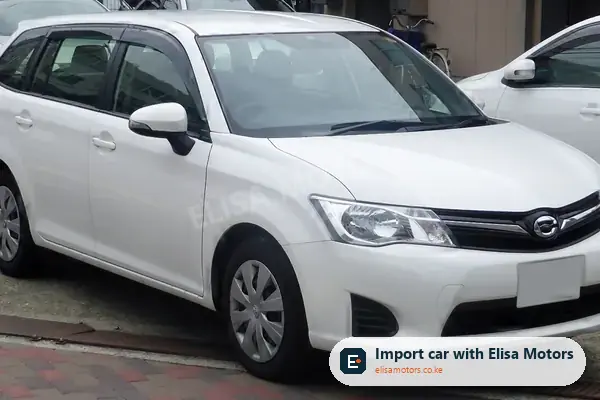
Here are two of Kenya's most popular auction buys, with landed prices and what to check on their sheets. For the Aqua, look closely at hybrid system comments and interior wear. For the Fielder, check the load area and rear bumper, since many were used as work cars.
Toyota Aqua specifications by version
Here is how each Toyota Aqua version we import compares. All of them seat 5, and you can import them from Japan.
Toyota Aqua S 1.5 Hybrid. This version uses a 1.5-litre hybrid engine with 100 hp, a e-cvt automatic gearbox and two-wheel drive. In addition, it returns about 34 km/L and lands in Kenya at roughly KES 1.3M – 1.55M.
Toyota Aqua G 1.5 Hybrid. This version uses a 1.5-litre hybrid engine with 100 hp, a e-cvt automatic gearbox and two-wheel drive. Moreover, it returns about 33 km/L and lands in Kenya at roughly KES 1.45M – 1.7M.
Toyota Aqua Crossover 1.5 Hybrid. This version uses a 1.5-litre hybrid engine with 100 hp, a e-cvt automatic gearbox and two-wheel drive. As a result, it returns about 32 km/L and lands in Kenya at roughly KES 1.5M – 1.75M.
Every Toyota Aqua we import includes these key features: full hybrid system, 30+ km/L, EV mode for silent low-speed driving, push start & smart key, toyota Safety Sense and ideal for taxi & ride-hailing.
Toyota Corolla Fielder specifications by version
Here is how each Toyota Corolla Fielder version we import compares. All of them seat 5, and you can import them from Japan.
Toyota Corolla Fielder X 1.5. This version uses a 1.5-litre petrol engine with 109 hp, a cvt automatic gearbox and two-wheel drive. In addition, it returns about 17 km/L and lands in Kenya at roughly KES 1.6M – 1.85M.
Toyota Corolla Fielder G 1.5 4WD. This version uses a 1.5-litre petrol engine with 103 hp, a cvt automatic gearbox and four-wheel drive. Moreover, it returns about 15 km/L and lands in Kenya at roughly KES 1.75M – 2M.
Toyota Corolla Fielder Hybrid G 1.5. This version uses a 1.5-litre hybrid engine with 100 hp, a e-cvt automatic gearbox and two-wheel drive. As a result, it returns about 33 km/L and lands in Kenya at roughly KES 1.85M – 2.1M.
Toyota Corolla Fielder WxB 1.5. This version uses a 1.5-litre petrol engine with 109 hp, a cvt automatic gearbox and two-wheel drive. Similarly, it returns about 17 km/L and lands in Kenya at roughly KES 1.8M – 2.05M.
Every Toyota Corolla Fielder we import includes these key features: large 407 L boot, folding rear seats, 4WD option for upcountry roads, hybrid option with 33 km/L, smart key & push start and toyota Safety Sense.
In both cases, grade 4 with interior B is a sensible target. Moreover, ask us to compare two or three sheets side by side before you decide. As a result, you will quickly learn what a good sheet looks like.
Where we deliver
We serve buyers across Nairobi, including Kilimani, Westlands, South B, South C, Syokimau, Ruaka and Rongai. We also serve Nakuru, Eldoret, Kisumu, Thika, Nyeri, Nanyuki, Machakos, Meru and Kakamega. At the coast, we serve Mombasa, Nyali and Malindi.
Start your Japan import
Use the order form on this page, call +254 725 310 112 or WhatsApp +254 725 310 112. You can also read our Japan import guide or browse cars from Japan.