Many entrepreneurs ask how to start a car import business in Kenya. The market is large, demand is steady and Kenyans buy tens of thousands of imported used cars every year. However, the business needs capital, knowledge and careful risk management. Therefore, this guide gives a realistic picture of what it takes.
We cover business registration, capital, sourcing from Japan and the UK, duty, cash flow, profitability, marketing and common pitfalls. Moreover, we explain how small dealers can work with an established importer like Elisa Motors to reduce risk while they grow.
This is general guidance, not legal or financial advice. Rules change, so confirm licensing and tax requirements with the relevant authorities and a qualified accountant.
Is car importing profitable in Kenya?
It can be. Margins depend on buying well, clearing efficiently and selling quickly. However, costs are high and capital is tied up for weeks while cars ship. Moreover, exchange rates and duty changes can squeeze margins. Therefore, successful importers focus on fast-selling models and tight cost control.
Step 1: Register your business
Register a business name or company with the Business Registration Service. Obtain a KRA PIN for the business. In addition, get the county business permit for your location. If you plan a showroom or yard, check zoning and premises rules.
Speak to an accountant about VAT registration, income tax and record-keeping. Similarly, open a business bank account to keep finances separate.
Step 2: Plan your capital
Each car ties up money from purchase until sale. That includes the purchase price, shipping, duty, clearing, registration and holding costs. In fact, duty alone is a large share of the landed cost. Consequently, most new importers start with a few cars and grow gradually.
Plan for unexpected costs, such as storage charges, repairs and slower sales. Moreover, keep a cash reserve. Many failures come from running out of cash while cars sit unsold.
Step 3: Choose what to import
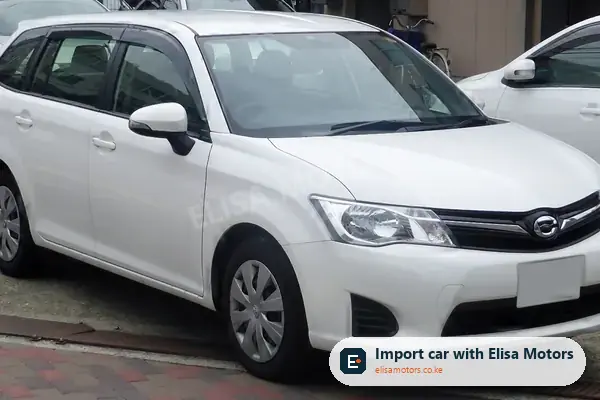
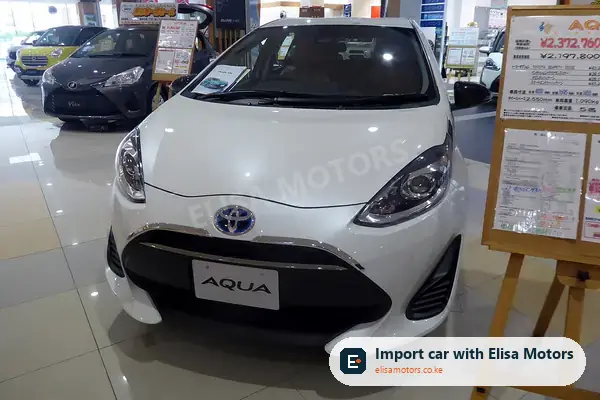
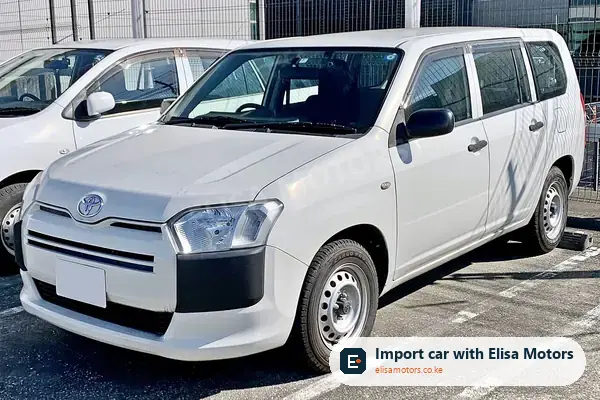
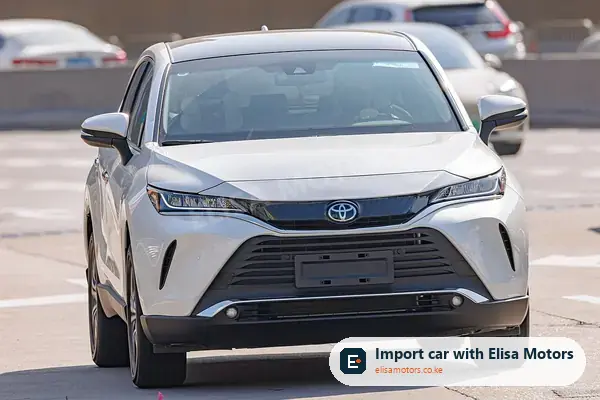
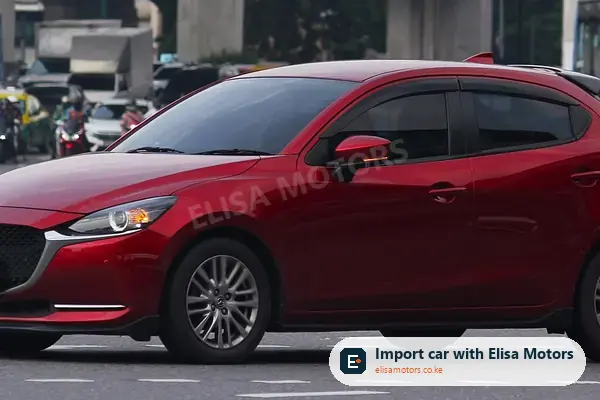
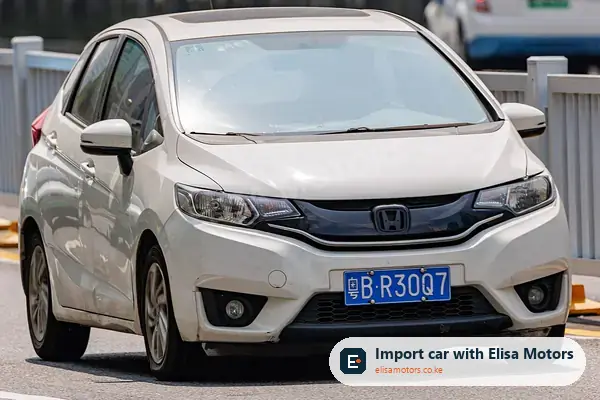
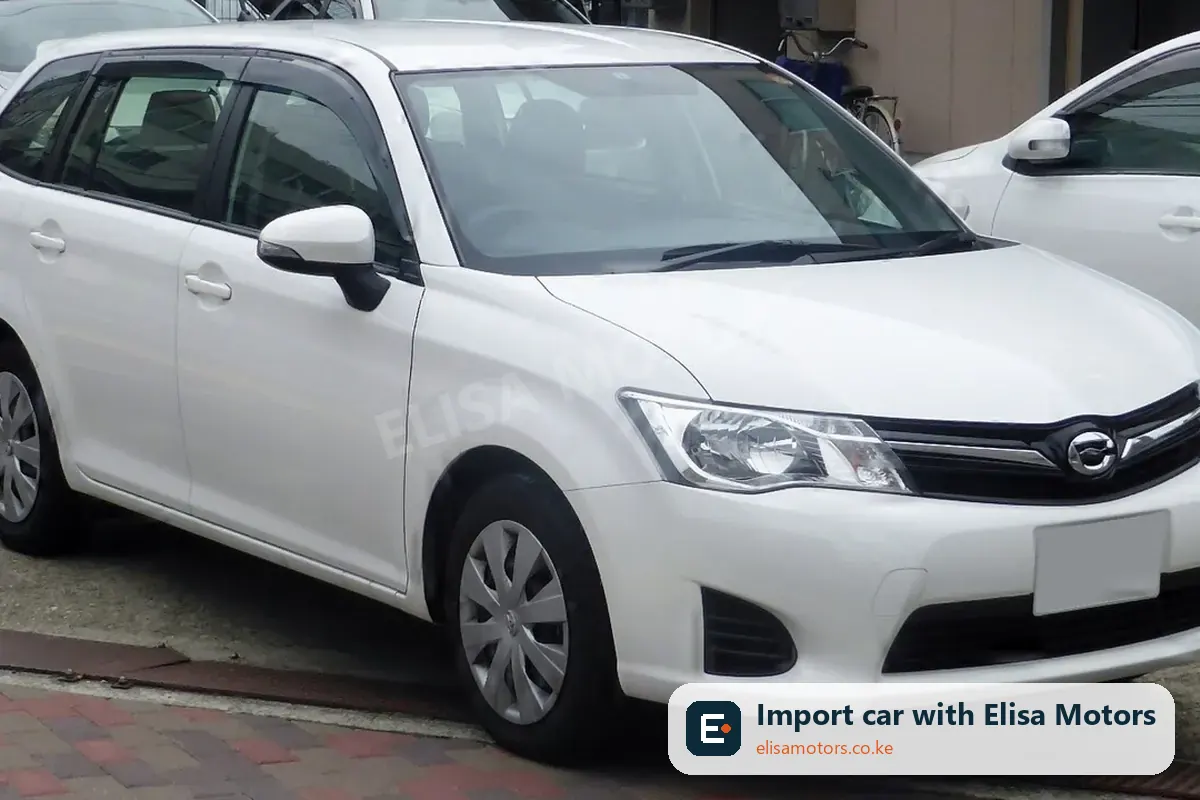
Focus on models that sell fast in Kenya. For example, the Fielder, Aqua, Probox, Demio and Fit have steady demand. Premium models like the Harrier sell well but tie up more capital.
| Model & version | Engine | Est. landed price (KES) |
|---|---|---|
| Toyota Aqua S 1.5 Hybrid | 1.5L Hybrid, 100 hp | KES 1.3M – 1.55M |
| Toyota Aqua G 1.5 Hybrid | 1.5L Hybrid, 100 hp | KES 1.45M – 1.7M |
| Toyota Aqua Crossover 1.5 Hybrid | 1.5L Hybrid, 100 hp | KES 1.5M – 1.75M |
| Honda Fit 13G 1.3 | 1.3L Petrol, 100 hp | KES 1.1M – 1.3M |
| Honda Fit Hybrid 1.5 (GP5) | 1.5L Hybrid, 137 hp | KES 1.25M – 1.5M |
| Honda Fit e:HEV Home (4th gen) | 1.5L Hybrid, 109 hp | KES 1.6M – 1.9M |
| Toyota Corolla Fielder X 1.5 | 1.5L Petrol, 109 hp | KES 1.6M – 1.85M |
| Toyota Corolla Fielder G 1.5 4WD | 1.5L Petrol, 103 hp | KES 1.75M – 2M |
| Toyota Corolla Fielder Hybrid G 1.5 | 1.5L Hybrid, 100 hp | KES 1.85M – 2.1M |
| Toyota Corolla Fielder WxB 1.5 | 1.5L Petrol, 109 hp | KES 1.8M – 2.05M |
| Toyota Probox DX 1.5 | 1.5L Petrol, 109 hp | KES 1.3M – 1.55M |
| Toyota Probox GL 1.5 | 1.5L Petrol, 109 hp | KES 1.4M – 1.65M |
| Toyota Probox Hybrid F 1.5 | 1.5L Hybrid, 100 hp | KES 1.7M – 1.95M |
Avoid rare models and unusual colours when starting out. They can take longer to sell. Read our cheap Japanese cars guide and best SUVs guide.
Step 4: Sourcing from Japan and the UK
Japan is the main source for affordable fast-selling cars. You will need an exporter or auction agent. Read our Japanese auctions guide. The UK suits European brands and premium buyers. Read our UK import guide.
Verify every car's auction sheet, mileage and age before buying. Read our auction sheet guide and mileage check guide.
Step 5: Understand duty and clearing
KRA calculates duty using CRSP values, adjusted for age. Duty is a major cost, so budget accurately. Read our KRA duty guide. Clearing at Mombasa involves KRA, KPA, shipping lines and verification. Read our Mombasa clearing guide.
Work with a reliable clearing agent. Delays create storage charges that eat into margins.
Step 6: The 8-year rule and timing
Only vehicles less than eight years old from first registration can be imported. In 2026, that means 2019 or later. Therefore, plan purchases so cars arrive in time. Cars near the cut-off carry risk. Read our 8-year rule guide.
Step 7: Sell your cars
Many importers sell from a yard, online marketplaces, social media or through referrals. Good photos, honest descriptions and verified documents build trust. Moreover, offering financing partners helps buyers. Read our car finance guide.
Pre-order model vs stock model
There are two main business models. In the stock model, you buy cars first and sell them after arrival. It offers higher margins but higher risk. In the pre-order model, customers order and pay deposits first. It reduces risk and capital needs. Therefore, many new importers start with pre-orders.
Common risks
Exchange rate swings, duty changes, slow sales, damaged cars, documentation errors and fraud are the main risks. Moreover, misjudging demand can leave cars unsold. Read our car import scams guide.
Toyota Corolla Fielder specifications by version
Here is how each Toyota Corolla Fielder version we import compares. All of them seat 5, and you can import them from Japan.
Toyota Corolla Fielder X 1.5. This version uses a 1.5-litre petrol engine with 109 hp, a cvt automatic gearbox and two-wheel drive. In addition, it returns about 17 km/L and lands in Kenya at roughly KES 1.6M – 1.85M.
Toyota Corolla Fielder G 1.5 4WD. This version uses a 1.5-litre petrol engine with 103 hp, a cvt automatic gearbox and four-wheel drive. Moreover, it returns about 15 km/L and lands in Kenya at roughly KES 1.75M – 2M.
Toyota Corolla Fielder Hybrid G 1.5. This version uses a 1.5-litre hybrid engine with 100 hp, a e-cvt automatic gearbox and two-wheel drive. As a result, it returns about 33 km/L and lands in Kenya at roughly KES 1.85M – 2.1M.
Toyota Corolla Fielder WxB 1.5. This version uses a 1.5-litre petrol engine with 109 hp, a cvt automatic gearbox and two-wheel drive. Similarly, it returns about 17 km/L and lands in Kenya at roughly KES 1.8M – 2.05M.
Every Toyota Corolla Fielder we import includes these key features: large 407 L boot, folding rear seats, 4WD option for upcountry roads, hybrid option with 33 km/L, smart key & push start and toyota Safety Sense.
Toyota Probox specifications by version
Here is how each Toyota Probox version we import compares. All of them seat 5, and you can import them from Japan.
Toyota Probox DX 1.5. This version uses a 1.5-litre petrol engine with 109 hp, a cvt automatic gearbox and two-wheel drive. In addition, it returns about 18 km/L and lands in Kenya at roughly KES 1.3M – 1.55M.
Toyota Probox GL 1.5. This version uses a 1.5-litre petrol engine with 109 hp, a cvt automatic gearbox and two-wheel drive. Moreover, it returns about 18 km/L and lands in Kenya at roughly KES 1.4M – 1.65M.
Toyota Probox Hybrid F 1.5. This version uses a 1.5-litre hybrid engine with 100 hp, a e-cvt automatic gearbox and two-wheel drive. As a result, it returns about 27 km/L and lands in Kenya at roughly KES 1.7M – 1.95M.
Every Toyota Probox we import includes these key features: heavy-duty load floor, 400 kg payload, simple & durable mechanicals, low running costs, hybrid option (2018+) and proven business workhorse.
Our services: sourcing support for dealers
Elisa Motors works with individual buyers and small dealers across Kenya. Here is how we help new importers.
1. Sourcing in Japan and the UK
We source cars for dealers through Japanese auctions and UK dealers. As a result, you access good stock without setting up overseas.
We verify every car first.
2. Landed cost calculations
We calculate landed costs before you buy. Moreover, we show the effect of exchange rates and duty.
That protects your margins.
3. Inspection and shipping
Every car passes the KEBS-appointed inspection. Read our inspection guide.
We ship by RoRo or shared container.
4. Clearing at Mombasa
We clear cars quickly to limit storage. Similarly, we prepare documents correctly to avoid penalties.
Speed protects profit.
5. Registration
We register cars with NTSA. Read our NTSA registration guide.
Your stock is ready to sell.
6. Delivery to your yard
We deliver to Nairobi, Thika, Nakuru, Eldoret, Kisumu, Kakamega, Meru and Mombasa. Read our car transport guide.
Covered carriers protect your stock.
7. Market advice
We share which models and specs are selling well. Moreover, we advise on timing and pricing trends.
Good information leads to better buying.
Understanding your margin
Your margin is the selling price minus the full landed cost and all holding costs. Holding costs include yard rent, insurance, staff, marketing and minor repairs. Moreover, every week a car sits unsold, those costs grow. Therefore, track the true profit on each car, not just the difference between buying and selling prices.
For example, a car that sells in two weeks with a small margin can be more profitable than one that sells in three months with a larger margin. As a result, many successful dealers prioritise fast turnover.
Exchange rates and timing
Most purchases are priced in yen, pounds or dollars. When the shilling weakens, your costs rise. Similarly, when it strengthens, your costs fall. Experienced importers watch exchange rates and plan purchases accordingly. In addition, some pay suppliers promptly to reduce currency risk.
Building trust with buyers
Trust is everything in the used car business. Share auction sheets, export certificates and inspection reports with buyers. Moreover, be honest about any defects. Offer test drives and allow independent inspections. Consequently, buyers return and recommend you to others.
Online reviews and social media testimonials help too. For instance, a short video handover with a happy customer builds credibility quickly.
Partnering with financiers and insurers
Many buyers need finance. Partnering with banks, SACCOs and asset finance companies widens your market. Similarly, insurance partners help buyers drive away quickly. Read our car finance and insurance guide.
Growing your business
Start small with fast-selling models. Reinvest profits and build a reputation. Then gradually add premium models or niche segments such as hybrids or commercial vehicles. Read our hybrid import guide and commercial vehicle guide. Moreover, keep detailed records to understand which cars make the most money.
Toyota Aqua specifications by version
Here is how each Toyota Aqua version we import compares. All of them seat 5, and you can import them from Japan.
Toyota Aqua S 1.5 Hybrid. This version uses a 1.5-litre hybrid engine with 100 hp, a e-cvt automatic gearbox and two-wheel drive. In addition, it returns about 34 km/L and lands in Kenya at roughly KES 1.3M – 1.55M.
Toyota Aqua G 1.5 Hybrid. This version uses a 1.5-litre hybrid engine with 100 hp, a e-cvt automatic gearbox and two-wheel drive. Moreover, it returns about 33 km/L and lands in Kenya at roughly KES 1.45M – 1.7M.
Toyota Aqua Crossover 1.5 Hybrid. This version uses a 1.5-litre hybrid engine with 100 hp, a e-cvt automatic gearbox and two-wheel drive. As a result, it returns about 32 km/L and lands in Kenya at roughly KES 1.5M – 1.75M.
Every Toyota Aqua we import includes these key features: full hybrid system, 30+ km/L, EV mode for silent low-speed driving, push start & smart key, toyota Safety Sense and ideal for taxi & ride-hailing.
Honda Fit specifications by version
Here is how each Honda Fit version we import compares. All of them seat 5, and you can import them from Japan.
Honda Fit 13G 1.3. This version uses a 1.3-litre petrol engine with 100 hp, a cvt automatic gearbox and two-wheel drive. In addition, it returns about 20 km/L and lands in Kenya at roughly KES 1.1M – 1.3M.
Honda Fit Hybrid 1.5 (GP5). This version uses a 1.5-litre hybrid engine with 137 hp, a 7-speed dct gearbox and two-wheel drive. Moreover, it returns about 36 km/L and lands in Kenya at roughly KES 1.25M – 1.5M.
Honda Fit e:HEV Home (4th gen). This version uses a 1.5-litre hybrid engine with 109 hp, a e-cvt automatic gearbox and two-wheel drive. As a result, it returns about 29 km/L and lands in Kenya at roughly KES 1.6M – 1.9M.
Every Honda Fit we import includes these key features: magic Seats flexible cabin, hybrid option (36 km/L), honda Sensing, push start and very roomy for its size.
Common beginner mistakes
First, buying cars you like instead of cars the market wants. Second, underestimating duty and clearing costs. Third, ignoring the 8-year cut-off timing. Moreover, paying unverified overseas sellers. Finally, overstocking before you understand demand. Each mistake is avoidable with careful planning and good partners.
Where we deliver
We supply dealers and individuals across Nairobi, including Mombasa Road, Ngong Road, Kiambu Road and Thika Road. We also serve Nakuru, Eldoret, Kisumu, Kakamega, Thika, Nyeri, Meru, Machakos and Kitale. At the coast, we serve Mombasa and Malindi.
Talk to us
Use the order form on this page, call +254 725 310 112 or WhatsApp +254 725 310 112. You can also read our full import guide.